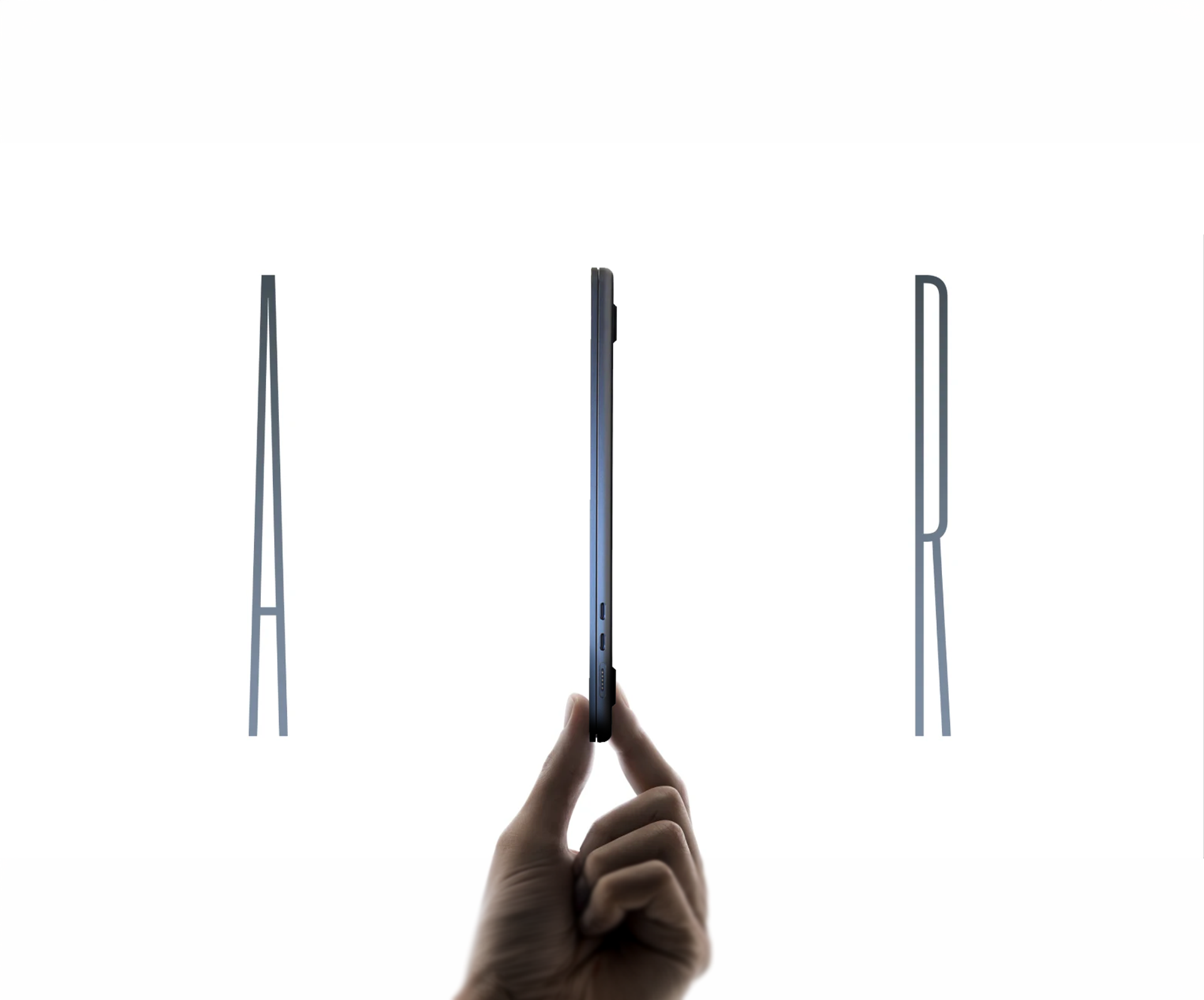
I have been daily driving an iPhone Air since January and I love it. I promise this is relevant 😉
People speak about technology purchases in spec sheet terms: CPU, gigabytes of memory, camera sensors, display nits, and so on. If you have read my earlier posts, it might come as no surprise to you that I detest this mental framework. If you subscribe to this view of technology, then perhaps this piece will persuade you otherwise.
When you use your phone to send an email, watch a movie, or do whatever else you might do, the 8GB of RAM is not what you’re perceiving. Nor is it the number of efficiency cores and performance cores in the CPU. Modern computers are so much more than the sum of their hardware parts; operating systems are constantly monitoring usage and allocating resources. Scheduling tasks with certain core affinity, moving pages to virtual memory and back, and various other functions to maximise the power/performance characteristics of the system.
And for other components not controlled by the system, such as the display, mics, speakers, etc, there are still several functions that software plays in the end experience. A 3000 nits HDR-capable display is no good if the program displaying to it does not pass through HDR data. Your stereo speaker system will sound rubbish if the system does not automatically switch between stereo and mono depending on orientation.
Industrial design also plays a role in the experience as I have pointed out previously: if either speaker grille on a stereo system is prone to clogging, then one would be left with an imbalanced signal, feeling the audio equivalent of a vestibular disorder.
All this is to say that a product is experienced as a whole, influenced by but not solely dictated by headline specifications. The iPhone Air serves as the best example I can think of of this in recent memory. On paper, it is an inferior product in every way to a number of recent, comparably-priced iPhones.
In my hand, though, the story is entirely different. It is delightfully light to hold and smooth to the touch. It’s more jewellery than technology. So many design decisions around the display and the Air’s industrial design were clearly made with the aim of putting your content front and centre. In a way, these aspects remind me of the Surface Studio and the iMac G4 with their incessant focus on making the physical product ‘fade to back’. If Liquid Glass did not make sense on your phone, that is because it was clearly designed with this phone in mind. Reflections, specular highlights, refraction, and fine details come to life on the ridiculously vibrant XDR display and feel cohesive with how the polished titanium frame catches glints of light from the environment.
(I promise this will lead back to the MacBook in due course and appreciate you indulging me.)
Encasing the Air is a criminal move. Without a case, the narrow bezels and vivid screen make watching movies feel like opening a portal to another world. It is quite hard to describe - it seems unreasonably realistic. The sun glimmering off Bond’s vessel or reflecting off the waves in No Time To Die, for example, actually feels solar-induced and not simply a clipped white. In short: the narrow distance from the edge of the display to the device edge, the wide colour gamut, and excellent HDR capability of the device provides levels of immersion I did not know I could fit in my jeans. Pair this with AirPods Pro Spatial Audio and you can essentially carry a cinema in your pocket.
The phone has also reignited a passion for spontaneous photography. After tuning the photographic style to my taste, the Air’s camera makes framing and capturing memories a joy. The results have been excellent, too. I cannot take full credit - these are very much group projects completed in equal part by Yuvraj Sethia and the phone’s computational photography processing pipeline. Yes, I miss the unique perspectives that ultra-wide glass afforded me, but any half-good photosmith is accustomed to creative problem-solving.
Coming from an 11 Pro and then a short affair with a 13 Mini, the Air’s longevity feels like a real blessing. This is the nuance I think most reviews of the phone miss; most people are not coming from a 15 Pro or 16 Pro - modern upgrade cycles are longer than that. Modern flagships really do spoil us for longevity - they’re goliaths. The Air feels like just a normal phone battery. I have not felt constrained or had to plan/work around it. Once again, something that a spec sheet would fail to indicate. In some scenarios, in fact, I am shocked at how efficient this machine is: back to my movie-watching use case (can you tell I have been on a fair few trains and flights?), I can get through a solid hour and a half of aforementioned incredibly dynamic viewing and only have to cough up 7-9%. Unheard-of screen-on time coming from my old phones.
To summarise, the iPhone Air is the essence of an iPhone. Polished (literally), considered, and very highly engineered. As a tool for making you feel special, it does the trick as much as a smartphone can. To echo the sentiments of Jon Prosser from FPT, this feels like the smartphone that is the closest and fullest endorsement of what one would imagine the original iPhone brief to be: the most capability in the smallest, most unobtrusive package possible - whatever the cost.
On that notion, let us ferry to MacBook land. As of March, there is a new kid in town: the Neo (which I wonder deserves its own post or not). Suddenly, the MacBook Air is liberated from the burden of being the more affordable, everyday laptop of the people - the Volksmacbook, if you will.
Just as the iPhone Air had a higher price tag to afford Apple the space and budget to turn the engineering up to 11 in service of the ultimate experience-form concentration, I think the MacBook Air should be redesigned to be as thin, light, and unobtrusive while providing its flagship, essential laptop experience. In a way, this would probably feel like the spiritual successor to the divisive but cult-loved Retina MacBook (which I owned and adored). It could use a titanium frame for strength/weight characteristics. It could use a tiered, Li-Po battery for maximum density. It could feature whatever wizardous display the Apple R&D team could concoct/source for the strongest ‘fade to back’ effect.
This MacBook could be something like the sports car that you could also daily drive. And thanks to the power-performance envelope that Apple Silicon has demonstrated its occupation of, this sports car could also probably tow your trailer while sipping fuel. Fancy that!
Presently, this fiction resides in my imagination, but a boy can dream. Thematically, speaking, this spiel is probably indicative of my wider infatuation with technology that maximises performance density. We are all surrounded with mediocrely performing products in small packages. A fortunate majority of us have used the class of machine that is high-performance and large-format. The miraculous sector, though, is the high-performance, small-footprint (and low-compromise!) middle ground. I imagine it’s where most of us product designers want our products to live. Thanks to the technological innovations of late, this is more achievable than ever with some care, attention, and clever engineering. There is no time to make stuff like the present.
If you have read this far, I commend your stamina in wading through my ramblings. Till the next one ;)
- Yuvraj